
Searching the Wake County Court Docket
Start your Wake County court docket search at the North Carolina eCourts Portal. Smart Search there pulls up a Case Summary for public cases in the Odyssey system. Wake joined eCourts early. That makes the statewide Portal the practical layer. Both Superior Court and District Court records in the county run through it. Anyone can use it free without an account. Registering lets you save a case under My Cases. It grants no filing powers. It opens no protected record.
Bring a file number or a party name before you begin. A tight Wake County court docket query beats a loose name sweep. Type the full case number when you can. Open the linked case. Read the Case Events and Hearings detail rather than trusting the one-line result.
- Open Smart Search in the Portal.
- Enter a full Wake number or a last-name, first-name search.
- Use Wake location, category, status, or date filters to narrow a basic result.
- Select the linked case number to open the Register of Actions.
- Contact the Wake Clerk for a certified copy or a permitted in-person file review.
Wake Court Docket Case Numbers
Nothing unlocks the Portal faster than a Wake County case number. The Judicial Branch breaks it into four parts: a two-digit year, a letter for case type, a six-digit sequence, and a three-digit county code. Wake's code is 910. Official examples include 21CR000003-910 and the civil pattern 25CV021587-910. Keep that suffix. It is what separates a Wake file from a case numbered the same way in another North Carolina county.
No full number? Then search the narrowest name you can document. A case-number wildcard needs at least four characters before *, and a person search needs at least three letters of a last name plus one first-name character. Advanced filters only refine basic criteria. A wide name search can hit the Portal's 200-result maximum, so narrow by Wake, category, filing range, or status.
| Portal field | Wake use | Key limit |
|---|---|---|
| Case Number | Use the complete file ending -910. | Most exact route. |
| Party Name | Enter last name, then first name. | Narrow a broad result. |
| Location | Select Wake County. | Separates local and statewide results. |
| Category / Status | Refine an existing search. | Not a standalone search. |
Note: A no-result message can mean a number typo, a timing gap, another county, a migration issue, or a lawful access limit.
Inside a Wake County Court Docket
What the Portal shows for a Wake County court docket is a public Case Summary, or Register of Actions. It is not a Clerk-certified original. The sections you see depend on the actual case. A public file may display case and assignment details. It can also show party roles, a chronological Case Events list, hearings, dispositions, financial information, and public documents where available. Civil, family, probate, and mental-health files can also show Causes of Action. A missing section has two possible causes. Either no data exists for it, or public access does not permit its display.
Case Events are the working history of the docket. Filing, service, setting, continuance, order, transfer, appeal, and disposition activity can all appear there. Read the newest relevant event alongside the current hearing information. Public results mask dates of birth and never expose Social Security numbers. Even so, a visible Portal record can still lack a confidential or sealed document.
| Case number | The unique Wake file identity, commonly ending -910. |
|---|---|
| Case information | Public type, status, and file-level details. |
| Assignment | Court assignment details entered for the file. |
| Case Events | The chronological Register of Actions history. |
| Hearings | Current settings when the record contains them. |
| Disposition | Recorded outcome or status detail, not a certified order. |
Wake Docket Conversion History
Wake County went live with eCourts on February 13, 2023. It was one of North Carolina's first pilot counties. That date explains an oddity. Some historical entries in a Wake court docket are stamped 12:00 AM. Portal guidance says converted events can carry that time as a migration artifact. Midnight is not proof that any hearing, filing, or court action actually happened then.
Check the event description against nearby entries. Ask the Wake County Clerk of Superior Court when the difference matters. Portal exists for public viewing. Authorized electronic filings go through a separate system, North Carolina eCourts File & Serve. Reading a Case Summary files nothing, changes no calendar, and authenticates no record.
North Carolina's eCourts overview documents the Odyssey system. That system is now used statewide. For Wake it explains why one online layer serves the trial divisions while the Clerk remains the official local custodian.
eCourts is the Wake search layer, not a substitute for a Clerk-issued copy.
Courts That Keep Dockets in Wake County
Wake County runs one unified General Court of Justice. It has no city-created trial courts. The Wake County Clerk of Superior Court keeps the dockets for both trial divisions. Superior Court handles felony trials. It also takes major civil matters and applicable appeals. District Court takes misdemeanors, infractions, traffic, and family matters. It also hears civil claims within its jurisdiction. Magistrates handle small claims and certain preliminary criminal functions inside the District Court division.
One Portal search can land you at either court level, so after opening a result, check the case type, assignment, and current setting. A Raleigh, Cary, Apex, Wake Forest, or Holly Springs address creates no city-run state-court database. The case category and the Wake file number tell you which court route applies.
| Court or channel | Wake docket coverage | Where to begin |
|---|---|---|
| Superior Court | Felony trials, major civil matters, and applicable appeals. | Portal, Clerk, and current calendar. |
| District Court | Misdemeanors, traffic, infractions, family, and district civil. | Portal, Clerk, and current calendar. |
| Magistrates / Small Claims | Small claims and preliminary functions. | Portal and Clerk small-claims channel. |
Wake Court Docket Buildings
You can search a Wake County court docket countywide. But the right in-person stop depends on case type. The Wake County Courthouse sits at 316 Fayetteville St. Mall in Raleigh. It handles civil matters except marriages. The Wake County Justice Center, at 300 S. Salisbury St., handles criminal matters and marriages. Both official location pages post regular weekday public hours and the main number, (919) 792-4000.
The split trips up plenty of visitors. A Portal result can say Wake County. It may not name the right counter. Civil, estate, small-claims, judgment, and special-proceeding questions belong to the Courthouse channel. Traffic, misdemeanor, felony, magistrate, and criminal setting questions belong to the Justice Center. Call the correct Clerk line before traveling if a counter or an immediate setting matters.
The official Courthouse location page identifies the civil building connected to a Wake court docket follow-up.
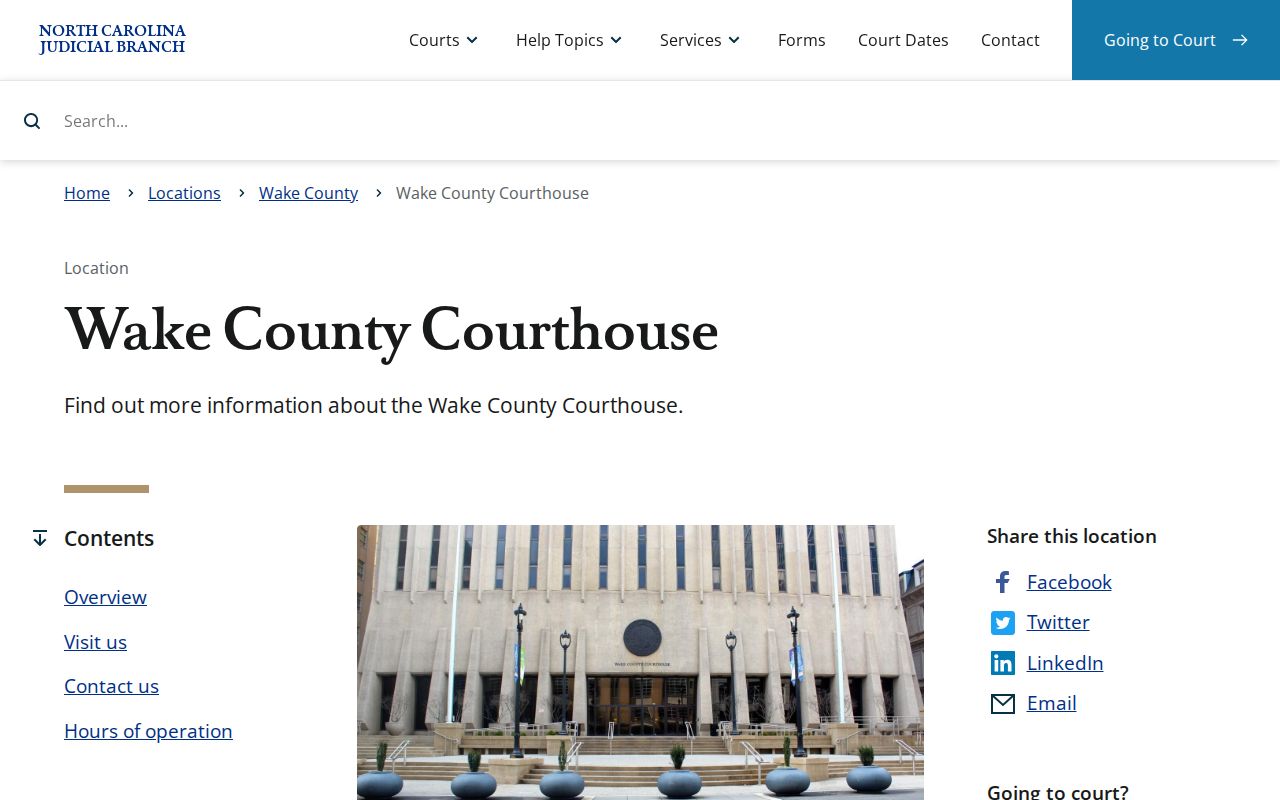
Wake splits its court docket activity between two buildings. Civil cases run through the separate civil building, while criminal and traffic matters move through the Justice Center channel.
How to Find Court Dates and Settings
Check a Wake court docket date through more than one current source. Start with the case Register. Open its Hearings section. Then use Search Hearings in Portal, select Wake, and choose a hearing type, a search type, and a date range before entering the case, party, courtroom, attorney, or judicial-officer information. The result shows the current hearing location and time. Portal notes that Search Hearings does not identify whether a setting is virtual or in person. Wake also posts local administrative schedules, including amended weekly calendars plus longer district and Superior Court schedules. Calendars complement the case record, not replace it. Any setting can be reset, continued, reassigned, or amended. For a hearing that is close, reconcile the current Register, the Search Hearings result, and the posted calendar. Take conflicts to the Clerk or courtroom.
Wake Court Calendar Channels
A Wake County court docket and a published calendar do different jobs. The Register is case-centered history with entered hearing information. Search Hearings works the other way, pulling current settings across both case and calendar fields. Local schedules organize sessions, divisions, and amended lists. A static schedule is not final proof. It cannot settle a call order or a changed hearing. That layered check matters most when a case carries both a recent event and an older notice. Administrative Traffic Court shows the point. It handles limited administrative traffic business in Courtroom 101 at the Justice Center. The posted instructions say no officer is present there. Officer-present trials are not held in that room. To contest an infraction, follow the initial-date and continuance process the court describes, then confirm the later setting through the current record and calendar. Know the case number and category first. Then Wake County court dates walks through the full setting workflow.
Public Access to Court Dockets
Public access to a Wake County court docket rests on the Clerk's records. N.C. Gen. Stat. § 7A-109 sets the duty. Each Clerk maintains records, files, dockets, and indexes, available for public inspection during regular office hours unless law prohibits access. Portal puts public entries online. That convenience adds no reach. Sealed cases, confidential documents, juvenile records, and protected personal information stay beyond it.
Wake public-access rules:
N.C. Gen. Stat. § 7A-109 makes Clerk records available for inspection except where law limits access.
N.C. Gen. Stat. § 7B-3001 restricts juvenile law-enforcement records.
N.C. Gen. Stat. § 15A-145.5 provides one expunction route, and an expunged record does not appear in Portal.
A blank result proves nothing about a case. The miss may come from a spelling issue, a number issue, timing, a transfer, a restriction, sealing, a confidentiality rule, or expunction. Registering with Portal grants no elevated access.
Wake Court Docket Public Terminals
Online search is not the only route into a Wake County court docket. The Judicial Branch says so plainly. Self-service terminals sit in Clerk offices statewide. They support criminal searches by defendant, case number, victim, or witness, and they draw stored-system information for civil, special-proceeding, and estate records. A case file can also be viewed in the county where it sits, whenever public inspection is allowed. Wake joined the early eCourts kiosk rollout too. The state described kiosk access to online services, scanning, printing, payments, and eCourts tools. It never promised a guaranteed kiosk count or a fixed public location in either Wake building. Ask the Clerk counter for the current spot. Never assume a desk has a printer or payments. The Judicial Branch kiosk announcement records the rollout context.
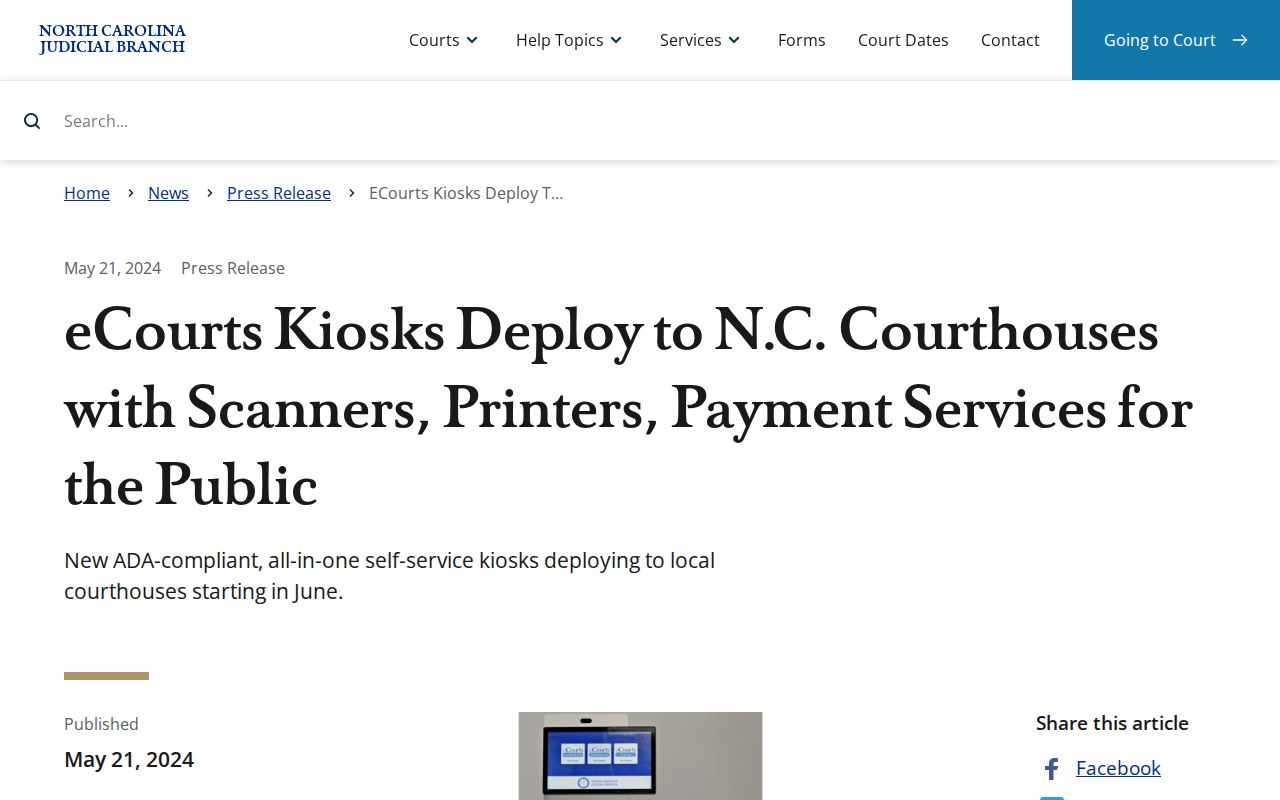
Some docket questions outrun a web search. When that happens in Wake County, or when an in-person file review fits better, the public terminal is the fallback.
Docket Records at the Clerk's Office
The Wake County Clerk of Superior Court holds the local files for Superior Court and District Court. No separate elected clerks split that job here. Pull the public Case Summary through Portal first. Then contact the Clerk for a file inspection, a plain copy, a certified copy, or any record question remote tools cannot resolve. Requests route faster with specifics. Give the file number, party or caption, division, document name or date, and the copy type you want. The Wake contact directory lists subject-specific lines. Traffic, misdemeanors, and felonies go to (919) 792-4300. Civil and family pending cases use (919) 792-4125, small claims (919) 792-4175, and record checks and expungement questions (919) 792-4325. The main office number is (919) 792-4000.
Wake County Clerk of Superior Court
Wake County Courthouse
316 Fayetteville St. Mall, Raleigh, NC 27601
(919) 792-4000
The official directory identifies the proper route for a Wake docket or record category.
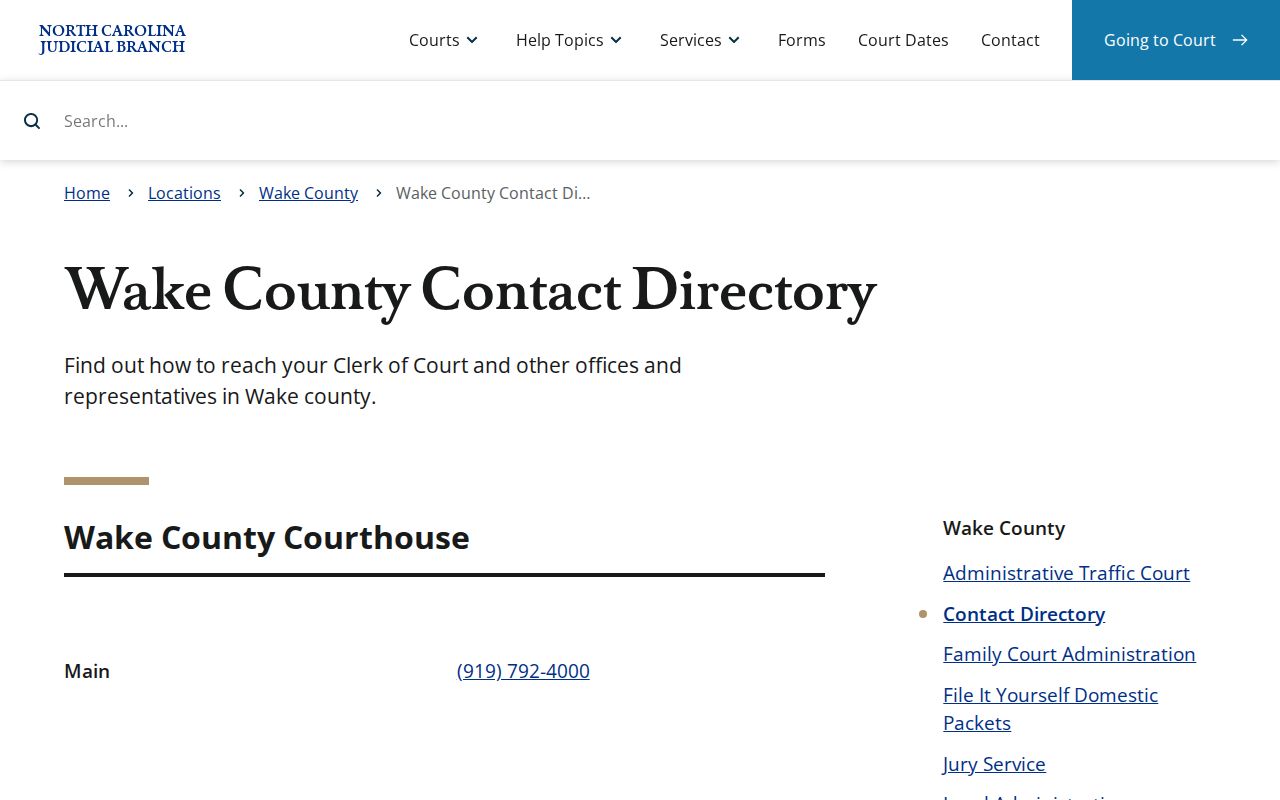
Wake gives each docket question its own line. Calling the number matched to criminal, civil, small claims, estates, or records keeps the matter with the proper Clerk channel.
Wake Court Record Copy Types
A Portal view, a plain copy, and a certified copy are three different products. The Register of Actions is the online history. A plain copy just reproduces a public filed record. A certified copy carries authentication from the Wake County Clerk of Superior Court. Fees come from the current statewide chart. It lists $2.00 for the first page of each copied document, $0.25 for each additional page or fraction, and $3.00 for a certificate under seal. Exemplification is listed separately at $10.00. Confirm the current amount, document availability, return method, and certification need before you mail anything. The Wake payment page explains how to pay. It does not provide a universal mail-copy form. The NCAOC public-record request form covers Judicial Branch agency records, so it cannot stand in for a local Wake court-file request, because NCAOC does not hold the local files.
| Need | Wake channel |
|---|---|
| Public case history | Portal Case Summary / Register of Actions. |
| Public document copy | Wake Clerk after confirming availability and fee. |
| Authenticated court copy | Wake Clerk certification. |
| Agency administrative record | NCAOC public-record process, not local case-file route. |
Wake Court and Federal Dockets
Raleigh has federal courts too. That fact trips up a lot of people. A federal case file is not a Wake County court docket, even when the courthouse sits downtown. State trial-court records live with the Wake Clerk and North Carolina eCourts, while federal civil and criminal cases run through the Eastern District of North Carolina's CM/ECF system, PACER, and a federal clerk. Bankruptcy has its own federal channel. Before sending any request, check the court name and file number. That keeps the search in the right system.
The Eastern District of North Carolina court-information page shows where the federal CM/ECF records actually sit. A Raleigh address alone will not make a federal case searchable through the Wake Portal.
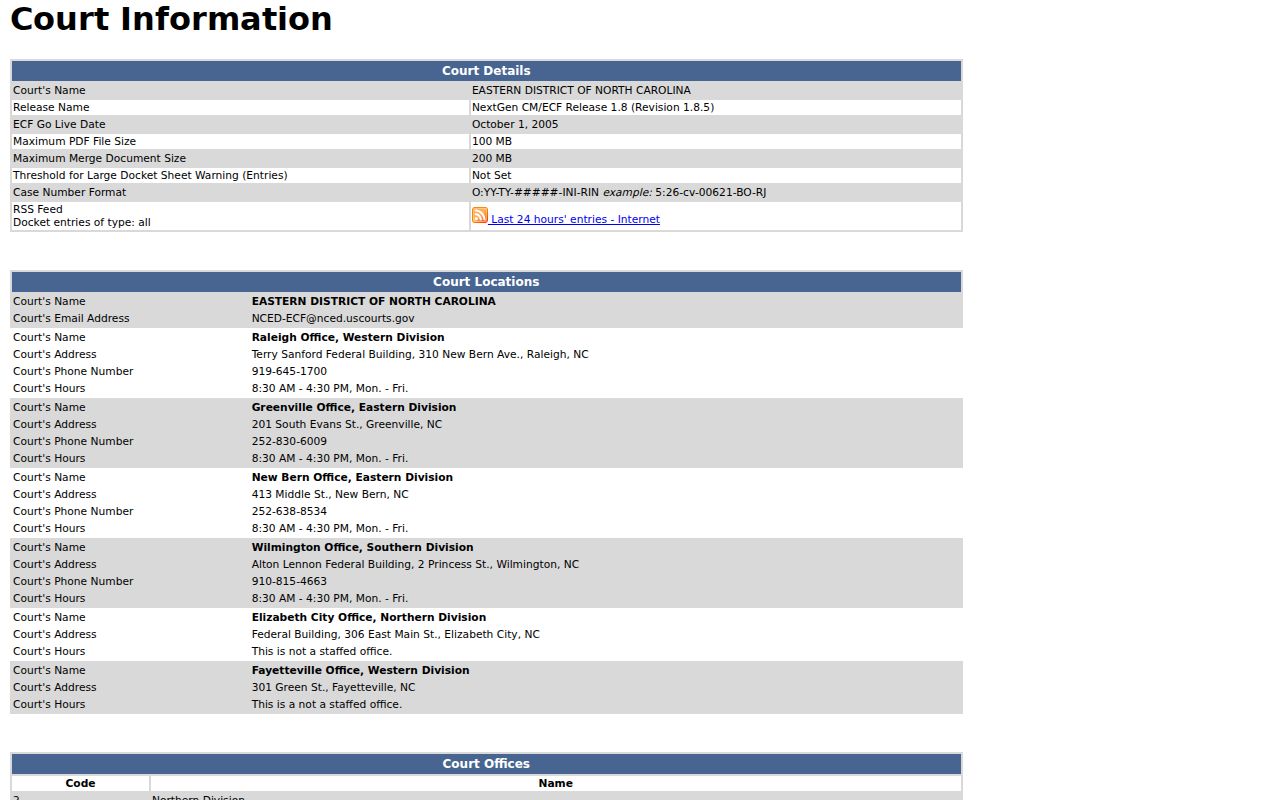
That federal interface belongs to a separate court system. It cannot replace the Wake Clerk's state-court record.
PACER's official fee information makes the split plain: PACER is federal and charges users, while Wake Portal public search carries no user fee.
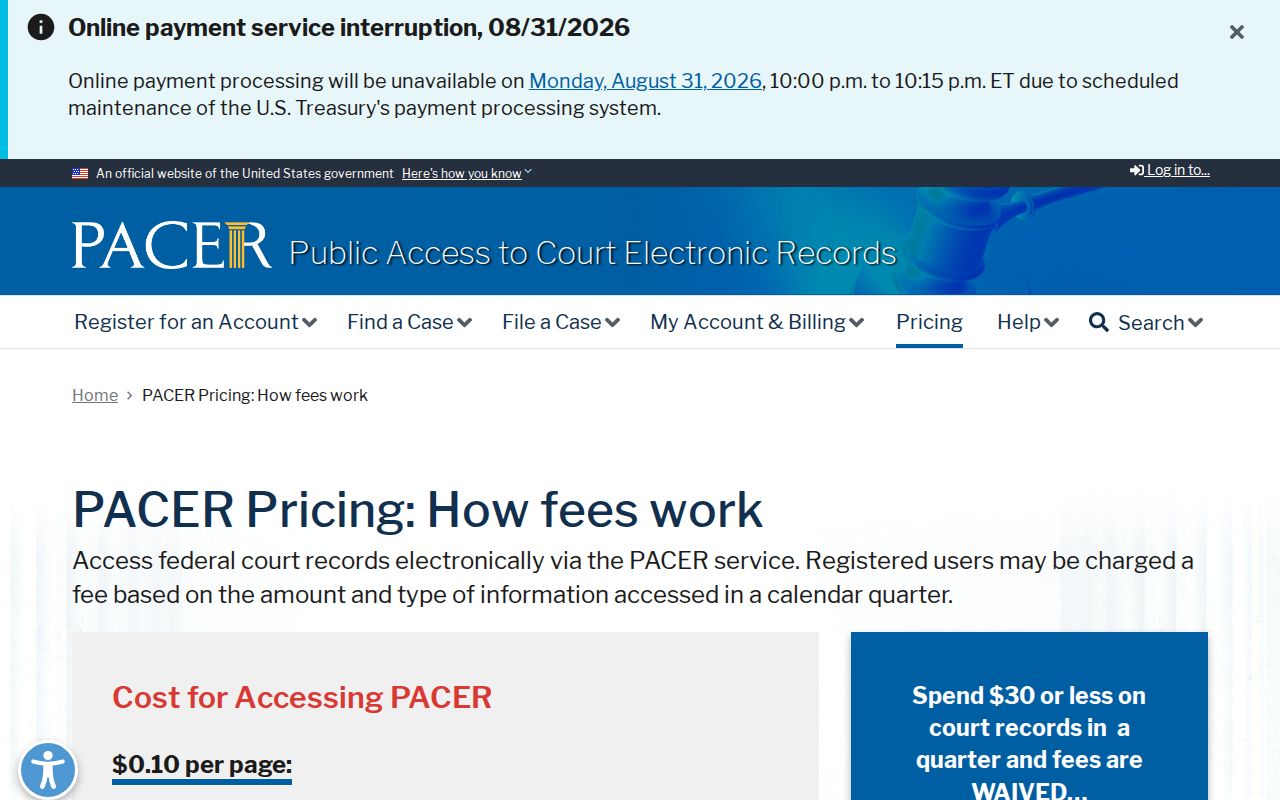
Keep the two channels straight, state and federal, and a Wake record request will reach the right clerk the first time.
Wake County Court Dockets by City
Wake County has five largest incorporated places. The April 1, 2020 Census puts them at Raleigh, Cary, Apex, Wake Forest, and Holly Springs. City lines do not create separate North Carolina trial-court dockets, though. A public state case tied to any of these places still runs through the same Wake Clerk, Portal, calendar, and court-division routes described above. Each city page notes one local wrinkle first. That wrinkle may be a parking notice, a service request, a police record, or a magistrate question, before the page points a court file back to Wake.
Raleigh Docket Search
467,665 in the 2020 Census. City parking citations and Wake state-court citations use different channels.
Cary Docket Search
174,721 in the 2020 Census. Cary service requests are separate from Wake court files.
Apex Docket Search
58,780 in the 2020 Census. Town parking tickets and state citations can take different paths.
Wake Forest Docket Search
47,601 in the 2020 Census. P2C police records are not the Wake court docket.
Holly Springs Docket Search
41,239 in the 2020 Census. The Town directs magistrate questions to Wake Justice Center.
Map and Directions to the Wake County Courthouse
Wake County splits its trial-court business between two downtown Raleigh buildings. Civil matters, small claims, estates, special proceedings, and judgments are handled at the Wake County Courthouse, 316 Fayetteville St. Mall, while criminal matters and marriages are handled a few blocks away at the Wake County Justice Center, 300 S. Salisbury St. Both buildings share the same Clerk of Superior Court and the same main phone number.
Wake County Courthouse
316 Fayetteville St. Mall
Raleigh, NC 27601
(919) 792-4000
Monday through Friday, 8:30 a.m. to 5:00 p.m.
Wake County Justice Center
300 S. Salisbury St.
Raleigh, NC 27601
(919) 792-4300
Monday through Friday, 8:30 a.m. to 5:00 p.m.
Traffic and misdemeanor sign-in at the Justice Center is outside Courtroom 101; if no clerk is in the lobby, check in with the district attorney inside the courtroom instead. Administrative Traffic Court there runs 8:15 a.m. to 4:00 p.m. on the scheduled date. Neither official building page publishes a parking or security-screening policy, so calling the appropriate Clerk line before a visit is the safest way to confirm current access.